
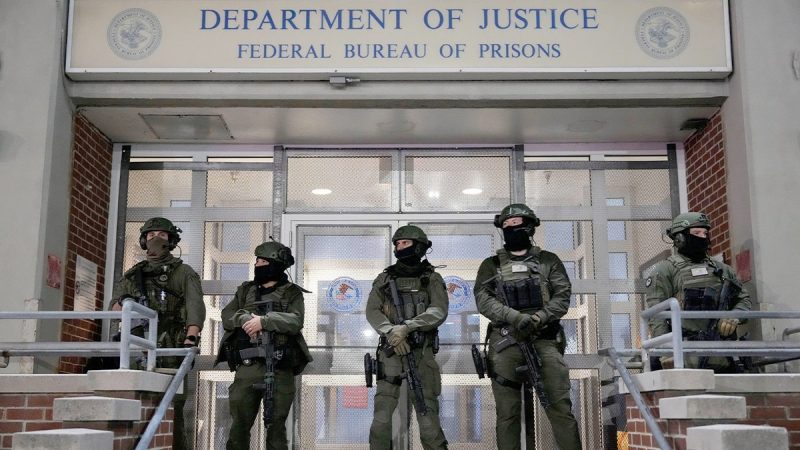
President Donald Trump has spent the bulk of his second White House term testing the limits of his Article II authorities, both at home and abroad – a defining constitutional fight that legal experts expect to continue to play out in the federal courts for the foreseeable future.
These actions have included the U.S. capture of Venezuelan strongman Nicolás Maduro, who was deposed during a U.S. military raid in Caracas earlier this month, and Trump’s continued fight to deploy National Guard troops in Democrat-led localities, despite the stated objections of state and local leaders.
The moves have drawn reactions ranging from praise to sharp criticism, while raising fresh legal questions about how far a sitting president can go in wielding power at home and abroad.
Legal experts told Fox News Digital in a series of interviews that they do not expect Trump’s executive powers to be curtailed, at least not significantly or immediately, by the federal courts in the near-term.
Despite near-certain challenges from Maduro – who would likely argue any U.S. arrest in Venezuela is illegal, echoing Manuel Noriega’s failed strategy decades ago – experts say Trump’s Justice Department would have little trouble citing court precedent and prior Office of Legal Counsel guidance to justify his arrest and removal.
U.S. presidents have long enjoyed a wider degree of authority on foreign affairs issues – including acting unilaterally to order extraterritorial arrests. Like other U.S. presidents, Trump can cite guidance published in the late 1980s to argue Maduro’s arrest was made within the ‘national interest’ or to protect U.S. persons and property.
Even if an arrest were viewed as infringing on another country’s sovereignty, experts say Trump could cite ample court precedent and longstanding Office of Legal Counsel and Justice Department guidance to argue the action was legally sound.
A 1989 memo authored by then-U.S. Assistant Attorney General Bill Barr has surfaced repeatedly as one of the strongest arguments Trump could cite to justify Maduro’s capture. That OLC memo states that ‘the president, pursuant to his inherent constitutional authority, can authorize enforcement actions independent of any statutory grant of power.’ It also authorizes FBI agents to effectuate arrests ordered by the president under the ‘Take Care’ clause of the U.S. Constitution, and says the authority to order extraterritorial arrests applies even if it impinges ‘on the sovereignty of other countries.’
Importantly, federal courts have read these powers to apply even in instances where Congress has not expressly granted statutory authorization to intervene.
‘When federal interests are at stake, the president, under Article II, has the power to protect them,’ Josh Blackman, a constitutional law professor at the South Texas College of Law, told Fox News Digital in an interview.
That’s because Article II, at its core, is ‘the power for a U.S. president to protect [its] people,’ Blackman said.
‘The reason why we detained Maduro was to effectuate an arrest. DOJ personnel and FBI agents were there to arrest him and read him his rights. And the reason why we used 150 aircraft, and all the other military equipment, was to protect the people who were going to arrest Maduro,’ he added. ‘It was a law enforcement operation, but [with] military backing to protect them – so Article II does factor in here, indirectly.’
Though Trump himself has not cited a legal justification for the invasion, senior administration officials have, including Secretary of State Marco Rubio and Secretary of War Pete Hegseth, who described Maduro’s arrest respectively, as a mission to indict two ‘fugitives of justice,’ and as a ‘joint military and law enforcement raid.’
In Minnesota, next steps for Trump are a bit more fraught.
Trump’s National Guard deployment efforts were stymied by the Supreme Court in December, after the high court halted Trump’s National Guard deployments under Title 10.
Trump had deployed the federalized troops to Illinois and Oregon last year to protect ICE personnel. But the high court issued an interim order rejecting Trump’s bid, noting that under Title 10, the administration could not federalize the National Guard until it first showed they tried to authorize the regular military to enforce the laws but could not do so.
Some court watchers have noted that the ruling essentially closes off alternatives for Trump to act.
Instead, Trump could opt to enact his Article II ‘protective powers’ domestically via a more sweeping and extreme alternative.
This includes the use of the Insurrection Act to call up active-duty U.S. troops and order them deployed to Minnesota and elsewhere.
The Insurrection Act is a broad tool that gives presidents the authority to deploy military forces in the U.S. when ‘unlawful obstructions, combinations, or assemblages, or rebellion’ make it ‘impracticable to enforce the laws.’
Critics note it is a powerful, far-reaching statute that could grant Trump an expansive set of powers to act domestically in ways that are not reviewable by Congress or by the courts.
Jack Goldsmith, a Harvard Law professor and former U.S. Assistant Attorney General, noted this possibility in a recent chat with former White House counsel Robert Bauer. By ‘closing off this other statute,’ he said, the Supreme Court ‘may have, some argue, driven the president in the direction of the Insurrection Act because this other source of authority was not available.’
Trump allies, for their part, have argued that the president has few other options at his disposal in the wake of the Supreme Court’s interim ruling.
Chad Wolf, the America First Policy Institute’s chair of homeland security and immigration, told Fox News Digital last week that Trump could have ‘little choice’ but to invoke the Insurrection Act.
‘If the situation on the ground in Minneapolis continues to grow violent, with ICE officers being targeted and injured as well as other violent acts … Trump will have little choice,’ he said.
Experts are split on to what degree there is a through-line between the two issues.
Blackman, the South Texas College of Law professor, said the ‘point of connection’ in Trump’s actions is the presidential ‘power of protection’ under Article II, which he said applies both abroad and at home. ‘The president can protect his law enforcement domestically, and he can protect his law enforcement abroad, both under Article II.’
Fox News Digital’s Ashley Oliver contributed to this report.